Explore the Corning Museum of Glass: Live Glassmaking, History and Family Fun
Updated: Oct 6
Glass is so common that it almost disappears. It holds water, frames windows, protects phone screens, and catches light in quiet corners of a room. Then a visit to the Corning Museum of Glass changes the way it looks forever.
Located in Corning, New York, the museum transforms a familiar material into something dramatic, ancient, scientific, and deeply creative. It is part art museum, part history museum, part science center, and part working studio. This unique blend makes it a rare destination that appeals to curious kids, design lovers, history buffs, and anyone who enjoys watching skilled hands create beauty from heat and motion.

Live glassmaking brings the museum to life
The live glassmaking demonstrations are often the moment visitors remember most. Watching molten glass move is truly hypnotic. It starts as a glowing orange gather at the end of a blowpipe, then stretches, expands, twists, and takes shape through careful timing and control.
The demonstrations are easy to follow, even for those who know nothing about glass. Museum artists explain their actions as they work, from heating the glass in the furnace to shaping it with simple-looking tools. The process feels both ancient and immediate. Fire, breath, gravity, and hand skill all play crucial roles.
The best part is how quickly the room becomes invested. A vase or bowl begins as a hot blob and slowly reveals its form. Kids watch the color change as the glass cools. Adults notice the teamwork involved. Art lovers appreciate the decisions behind the finished object.
These demonstrations also help visitors understand the pieces in the galleries. After witnessing the challenges of controlling molten glass, a delicate vessel or complex sculpture no longer feels like a static object. Instead, it becomes evidence of patience, practice, and imagination.

The galleries trace thousands of years of glass history
The Corning Museum of Glass is renowned for its impressive collection, and the galleries make a compelling case for glass as one of the world’s most adaptable materials. Visitors can journey from ancient glass vessels to modern sculptures, with plenty of surprises along the way.
Historical artifacts show how people used glass for storage, ceremony, trade, science, and beauty. Small bottles, ornate cups, stained glass, and decorative objects reveal how glass traveled through cultures and centuries. Some pieces are practical, while others are clearly made to impress.
The museum’s historical displays also illustrate how glassmaking evolved over time. Early methods relied on handwork, local materials, and inherited skills. Later advances opened the door to clearer glass, new colors, larger forms, and more precise scientific applications.
This long timeline gives the museum unusual depth. A visitor can admire the color of an ancient object and then later see a contemporary artwork that bends the idea of glass in a completely different direction. The material remains the same, but its purpose keeps changing.
For art enthusiasts, this range is one of the museum’s biggest strengths. Glass can be fragile, heavy, transparent, opaque, playful, formal, simple, or wildly complex. The galleries showcase all of these possibilities without overwhelming the experience.

The science of glass makes the visit educational
The museum is not only about what glass looks like; it also explains how glass behaves. This scientific angle adds extra value to the visit, especially for families and students.
Glass occupies an interesting space between solid structure and fluid history. Exhibits help explain how heat changes it, why different ingredients affect color and clarity, and why glass can be strong in one setting yet break in another. These concepts feel easier to grasp after watching a demonstration or seeing objects from different eras.
The educational appeal is hands-on and visual. Instead of reading long panels and moving on, visitors can connect ideas across the museum:
A live demo shows how glass softens in intense heat.
A historical gallery illustrates how makers used glass before modern factories.
A science exhibit explains why certain formulas yield different results.
A contemporary artwork showcases how artists push the material beyond its traditional functions.
This layered learning is what makes the museum so effective. It does not separate art, science, and history into isolated boxes; it shows how they overlap.
Families can explore without everything feeling too formal
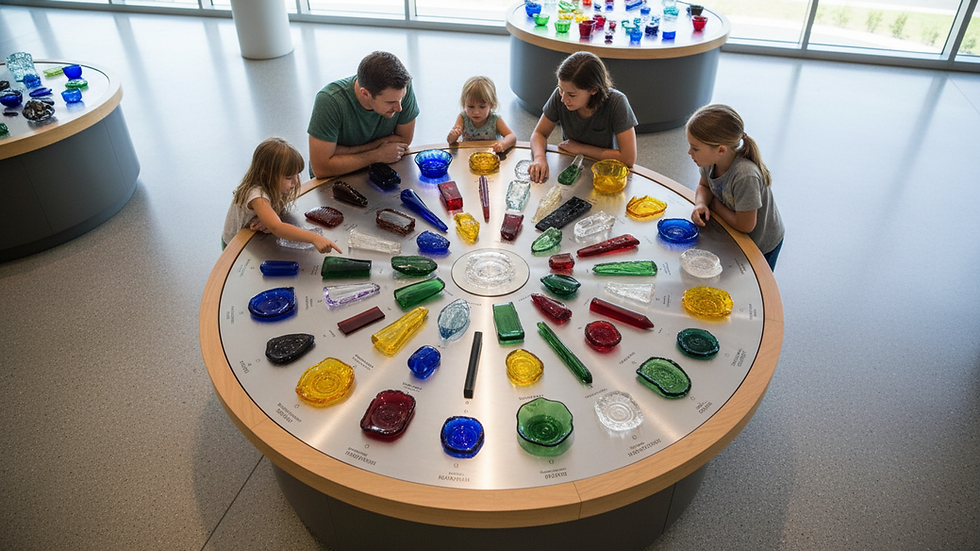
Museums with fragile objects can sometimes feel stressful for families. The Corning Museum of Glass has a different rhythm. Yes, there are delicate artworks and historic pieces, but there are also active demonstrations, educational exhibits, and open spaces that help keep attention moving.
Children often respond to the hot glass shows because they are visual and dramatic. There is fire, color, movement, and suspense. The process has a clear beginning and end, making it easier to understand than a quiet gallery label.
Families can also use the visit as a way to discuss everyday objects. A drinking glass, light bulb, window, telescope lens, or fiber optic strand can lead to a bigger conversation about design and science. This connection makes the museum feel relevant to daily life rather than separate from it.
A good family visit does not need to cover everything. Pick a few anchors:
Watch a live glassmaking demonstration.
Visit the historical galleries.
Spend time with hands-on or science-focused exhibits.
Leave room for wandering toward whatever catches the eye.
This approach keeps the day flexible and fun.
Art lovers will find more than decorative glass
For those drawn to sculpture, contemporary craft, design, or material culture, the museum offers far more than just pretty objects. Glass invites artists to work with risk. It can crack, slump, stretch, reflect, distort, and glow. These qualities give the finished works a sense of tension.
Some pieces celebrate technical perfection, while others use glass in unexpected ways, playing with scale, shadow, texture, or transparency. A clear form can vanish into its surroundings, while a colored object can shift with the light. A polished surface can reflect the viewer, making the gallery part of the work.
This makes the Corning Museum of Glass especially rewarding for slow looking. A piece may seem simple from across the room, then reveal bubbles, layers, cuts, or color changes up close. The more time spent looking, the more the material gives back.

Tips for planning a better visit
A little planning goes a long way, especially for anyone traveling from out of town. The museum can easily fill several hours, and visitors with a strong interest in art or science may want even more time.
Check the day’s schedule upon arrival to better plan around demonstrations. The live shows are a highlight, and building the visit around at least one can make the whole experience feel more complete.
Wear comfortable shoes. The museum covers a lot of ground, and the galleries invite slow movement. If visiting with kids, plan short breaks between exhibits rather than trying to push through every room at the same pace.
The Museum Shops are also worth exploring. They give visitors a chance to see how glass works as a gift, design object, and everyday material. Even browsing can extend the themes of the museum beyond the galleries.
Why this museum stays with visitors
The strongest museums change how people see the world after they leave. The Corning Museum of Glass does that with something most people touch every day.
It shows glass as ancient and modern, useful and artistic, delicate and strong. It turns craft into performance through live glassmaking. It transforms history into a walk through human invention. It makes science visible, colorful, and memorable.
For families, it offers an outing that feels both fun and meaningful. For art enthusiasts, it provides a serious look at a material with endless range. For everyone else, it serves as a reminder that even the most familiar objects have remarkable stories behind them.
A visit to Corning is more than just a museum stop. It is a chance to watch fire become form and to see an everyday material in a completely new light.
---wix---


Comments